You can watch the video or read the article below instead.
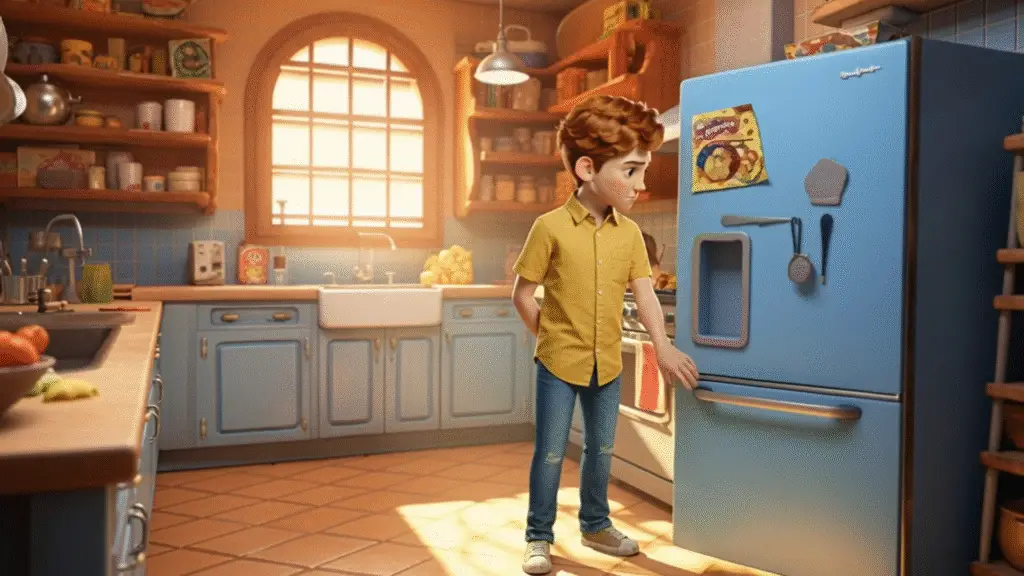
It is afternoon and you are relaxing on the sofa. Your kid comes home from school and heads to the fridge. You say: “Hi honey, how was school?” Your kid answers: “Good”, takes the soda and leaves to his room.
If this feels like the deepest conversation you’ve had with your kid lately, this article is for you. By the end of this article, you’ll know how to help your child talk to you, and how to build a real, honest connection with them.
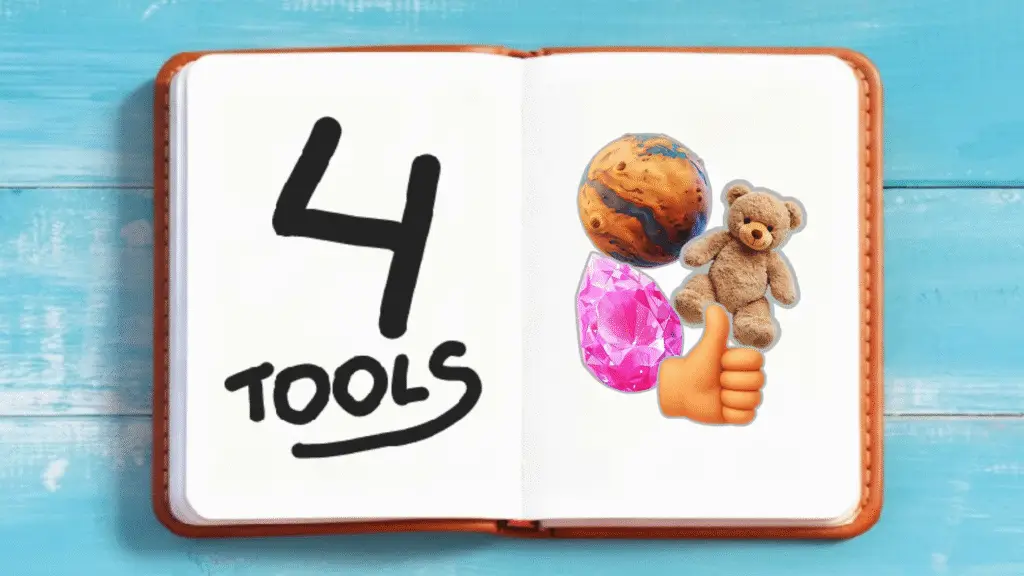
I’ll give you four powerful hacks, and they work. And if you want, you can grab a free printable tool as well.
As always, I’ve done my homework. These insights are based on solid research. Plus, I’ve tested them all in my own messy life too.
So, let’s dive right in.
Visit Your Kid’s Planet
First, let me ask you something. How well do you know your child from 1 to 10? Research shows most of us actually know less than we think we do, and sometimes it really does feel like your kid lives on a completely different planet.
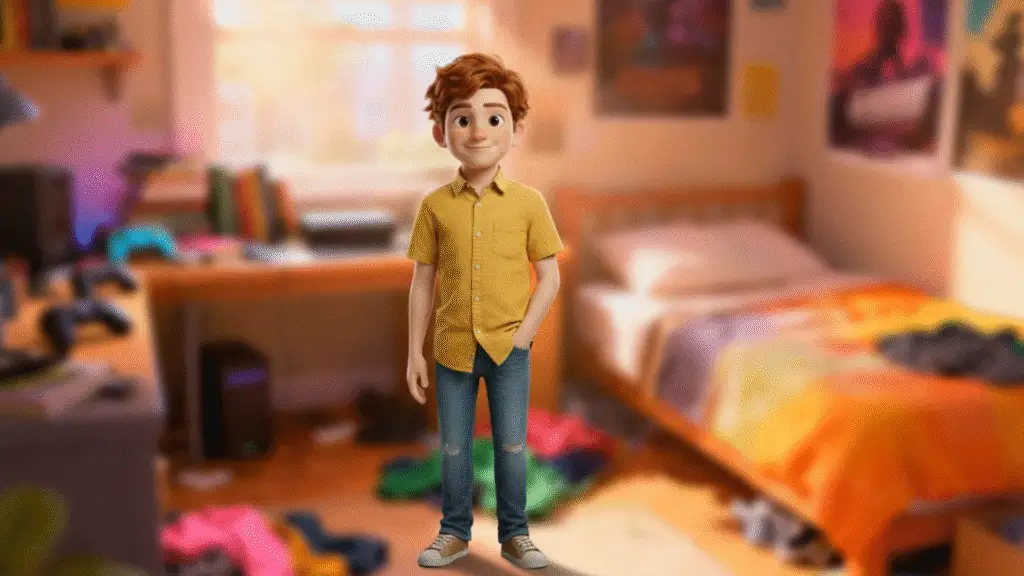
If you’d love to understand your kid better, this tip is for you. The good news is you can actually visit your kid’s planet. Just ask them to show you who they are and what matters to them.
Try this. Go to your kid with calm, curious vibe, and ask, “Can I join you? Maybe you can teach me too.” Remember that you are the student here. They are the expert. Let them lead. Nod, ask little follow-up questions, stay open. The goal is to be supportive, not critical.
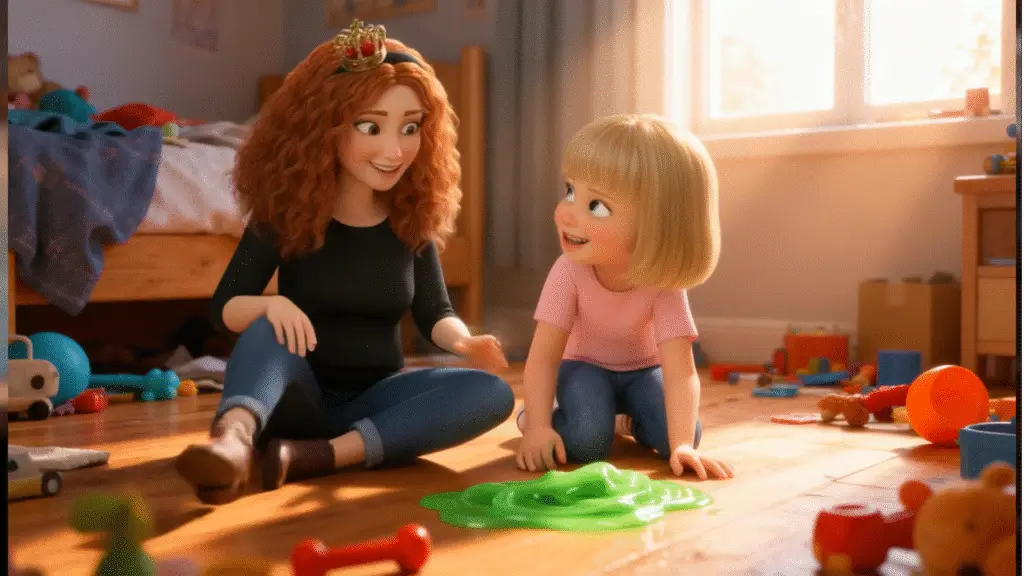
When you see their eyes starting to sparkle, you’ll know you are doing it right. Kids, like all humans, love talking about what they care about. And what if their passion feels painfully boring to you? Totally normal. You don’t need to get excited about dinosaurs. Show them: If it matters to you, it matters to me.
In the end, you are not studying slimes, you’re studying your kid. When you really watch them, you’ll see so much more than the words can say.
Meet Pete: A Safe Mirror
Meet Pete, your kid’s new best friend.
Let’s start with a small thought experiment. Imagine you are having coffee with a friend. Your friend opens up about having conflict with a coworker, and not knowing what to do. You might hear yourself giving calm, sensible advice.

But later that week, you disagree with your own coworker. You come home confused and anxious. Worry and stress cloud your mind. It’s impossible to think clearly. If you get what I’m talking about, hear me out. The same thing happens to your kid. If their problems feel too close, they can’t see solutions clearly.
So here’s where Pete comes in. Pete is a way to talk about your kid, without talking directly about your kid. It’s a tool that helps especially when you need to bring up something a bit difficult. Pete is a bit like your kid, but not exactly. He’s a safe mirror, where your kid can see their life more clearly.

So, next time you need to bring up a tricky topic, invite Pete into the conversation. Say something like, “Pete is often in a bad mood after school. I wonder why that is.” Now you’re not talking about your kid directly. You are talking about Pete. And suddenly, your kid might open up and talk freely, even about tough things.
Once you’ve solved Pete’s problem together, you can gently build a bridge back to your kid’s life. Do you think doing the same might help you too?
Pete can be anyone—a toy, an idol, a favorite movie character. If your kid is little, a stuffed animal makes a perfect Pete. Just remember to be warm and understanding to Pete, because your kid identifies with him.
Collect “GEMs” (Genuine Encounter Moments)
Would you like a pile of diamonds? This hack is even more valuable. Listen and thank me later.
One of the most powerful ways to connect with your kid is through tiny moments that can be called gems. Here’s how to get them.
Picture this: Your kid has just won a game. They rush to you excited. “Mom, you won’t believe what happened!” You’re in the middle of writing an important message. It’s tempting to mumble something, half-listen, and finish typing the message.
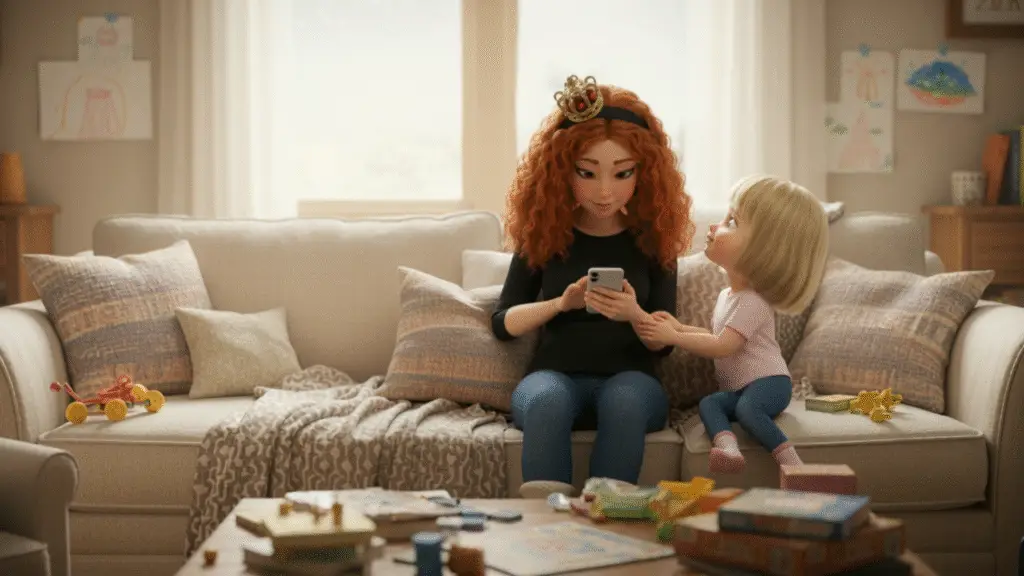
But what if you didn’t? Put your phone down. Turn toward your child. Look at them. You’ll see the emotion overflowing. Let yourself share a little of that feeling. Say, “Tell me what happened.” When they have told you, say something warm like, “I’m so happy to hear that.”
In that moment, you are both fully present. And it only takes about 30 seconds. But it still changes something in your child.
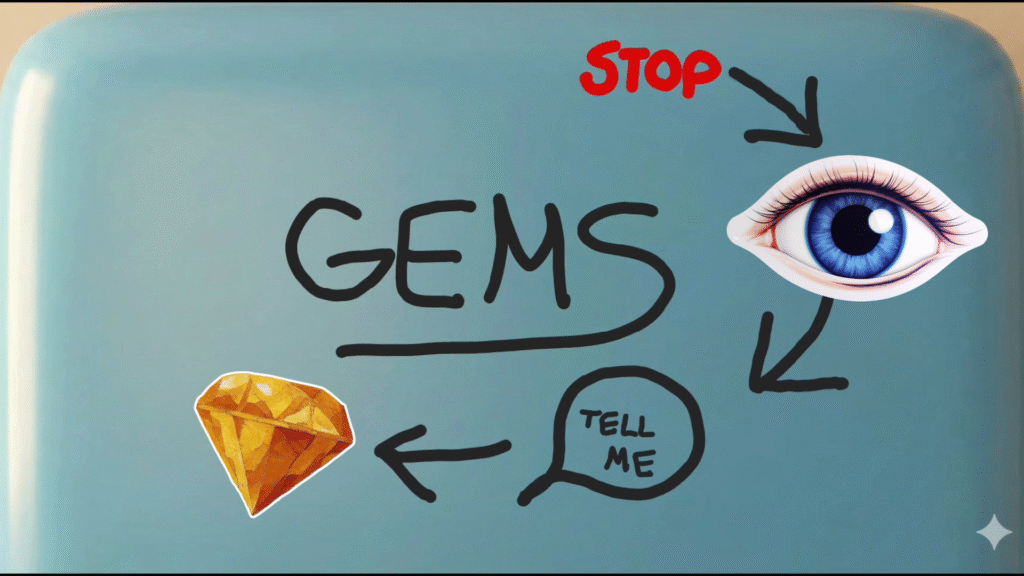
These little moments are called GEMs, Genuine Encounter Moments. And apparently, they do wonders. Way more wonders than you’d think for something that lasts about 30 seconds. When you use the gem method in the tiny everyday stuff, your child becomes much more willing to talk when the big stuff shows up.
Wanna know what surprised me? Once I started collecting these little gems with my kids, I realized that I do love them as well. There is something almost magical about sharing a moment of full presence with your child.
Let Your Child Show Their Thoughts: Free Printable Game
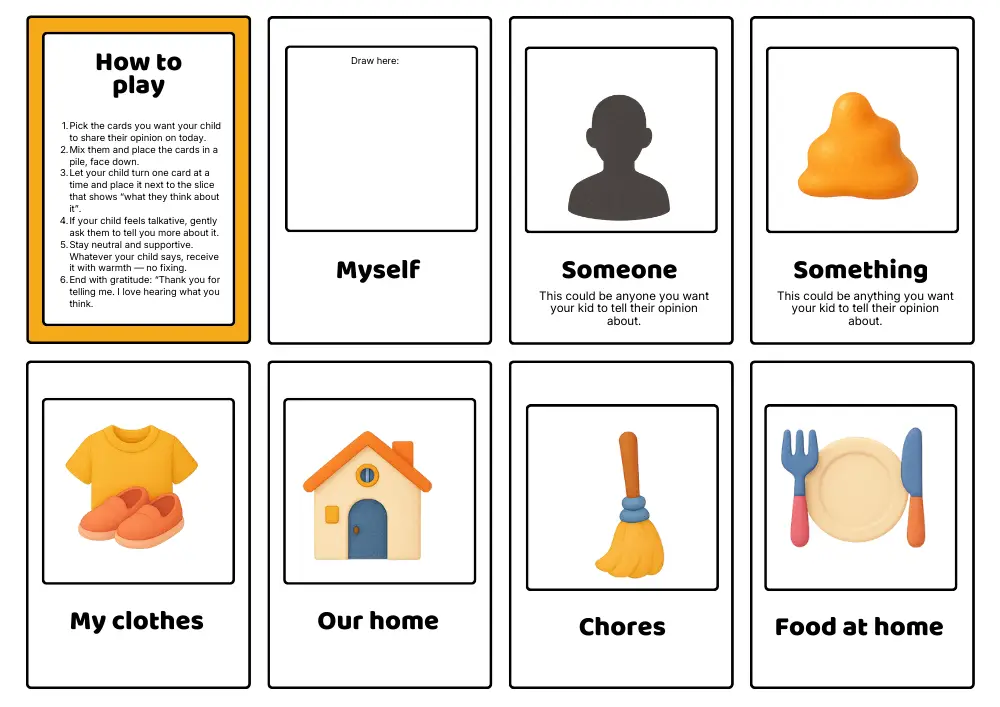
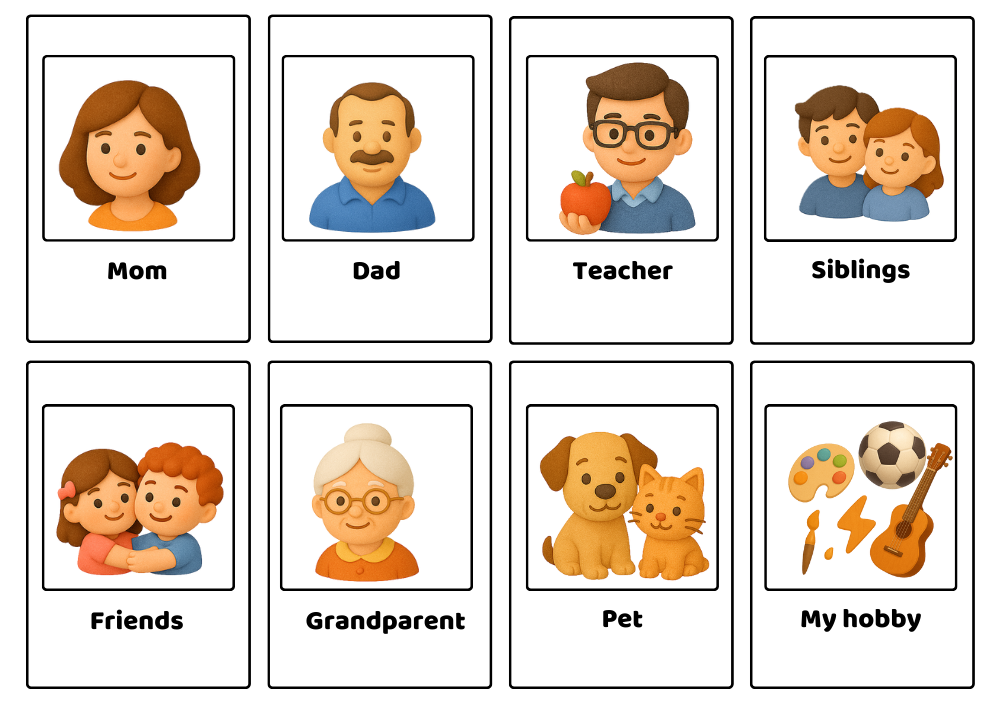
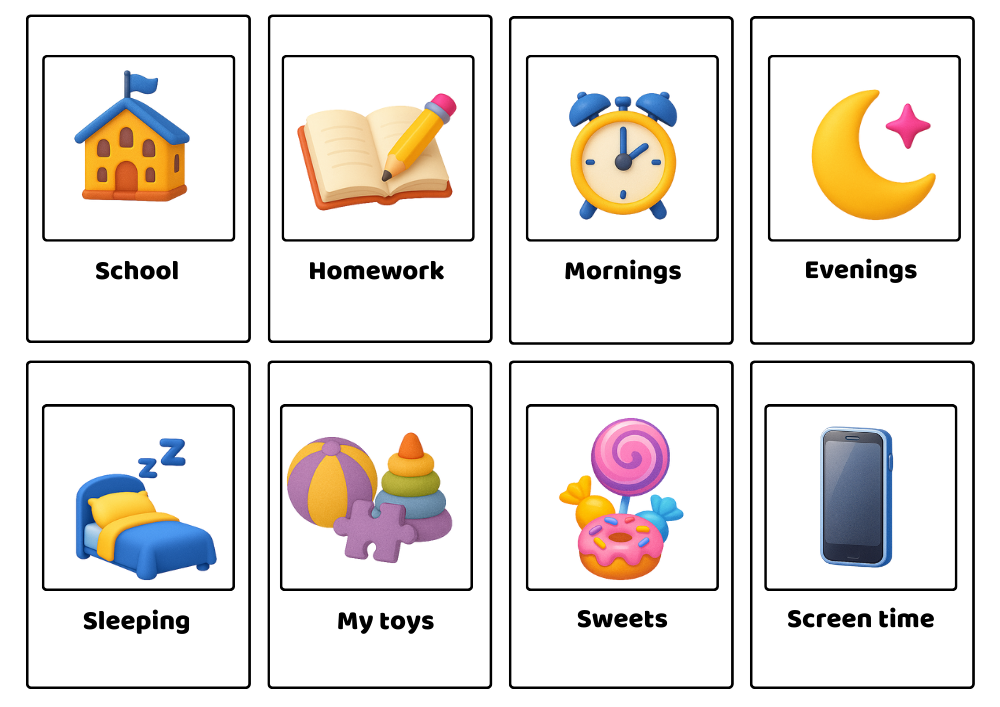
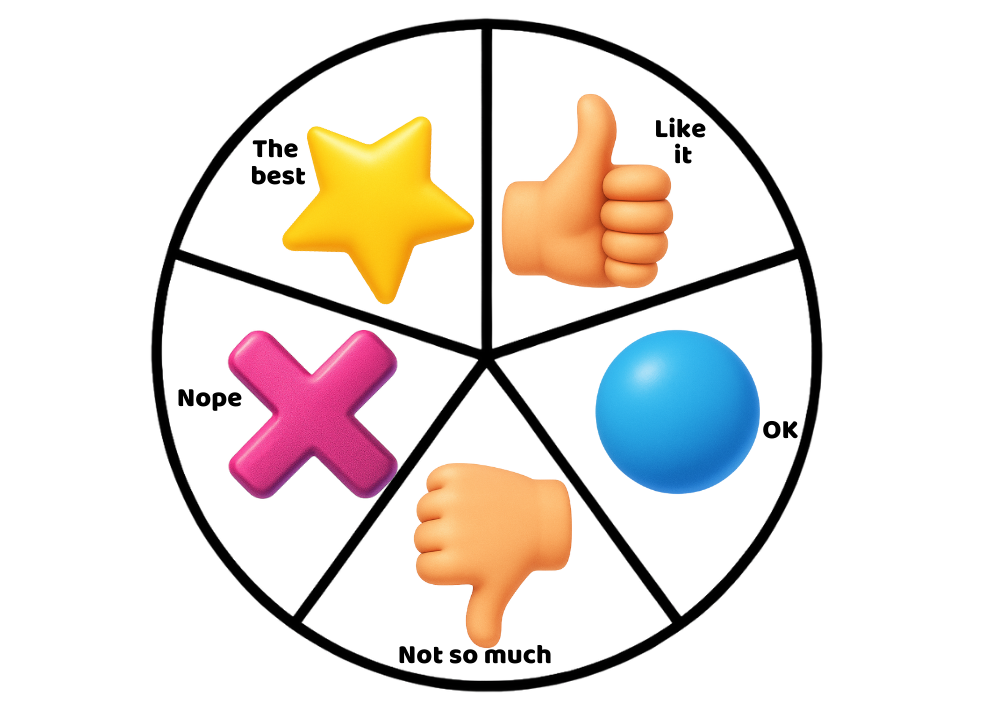
So, how are you doing today? This hack is about letting your child show their thoughts, not only talk about them. To help with that, I created a simple little game you can use together.
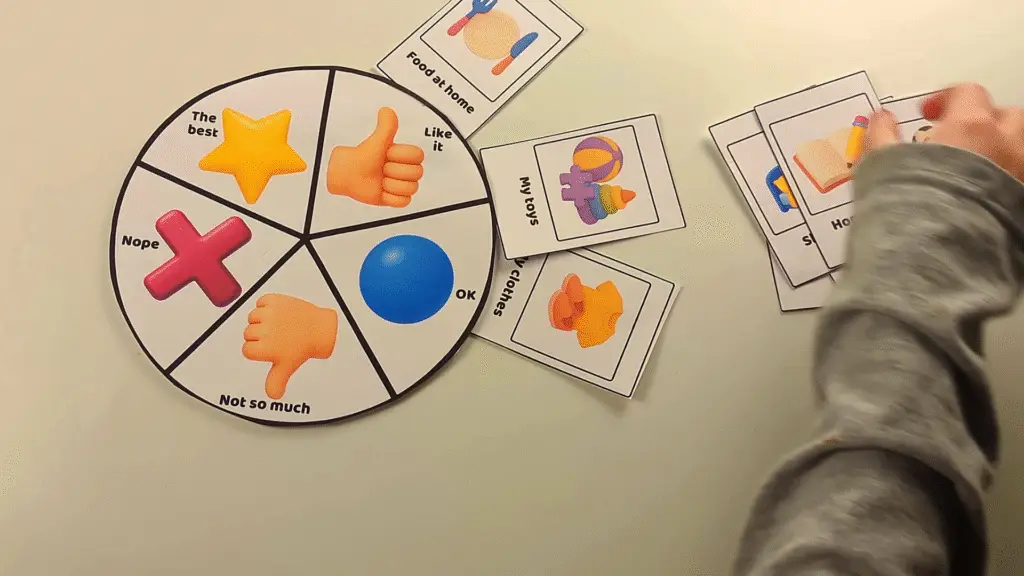
Each card shows something in your child’s everyday life. Some kids find it hard to put thoughts into words. But by playing this game, you will at least know a little of what they are feeling.
How to play:
- Pick the cards you want your child to share their opinion on today.
- Mix them and place the cards in a pile, face down.
- Let your child turn one card at a time and place it next to the slice that shows “what they think about it”.
- If your child feels talkative, gently ask them to tell you more about it.
- Stay neutral and supportive. Whatever your child says, receive it with warmth — no fixing.
- End with gratitude: “Thank you for telling me. I love hearing what you think”.
If you want to talk about feelings instead of opinions, I’ve included “How do I feel” board option to the game as well.
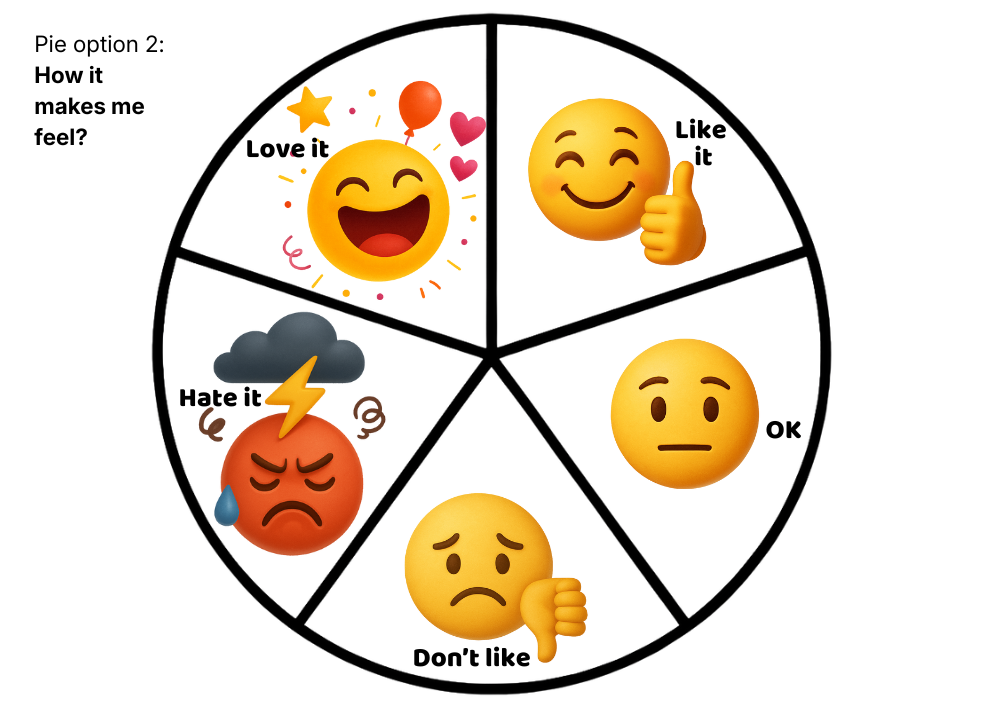
You can download and print the game for free as pdf here:
So that was four tips for getting a child open up. I really hope this article gave you something useful, something you can try already today. Goodbye and God bless.